🧠 EHR Systems, Reimbursement, and the Missing Administrative Layer
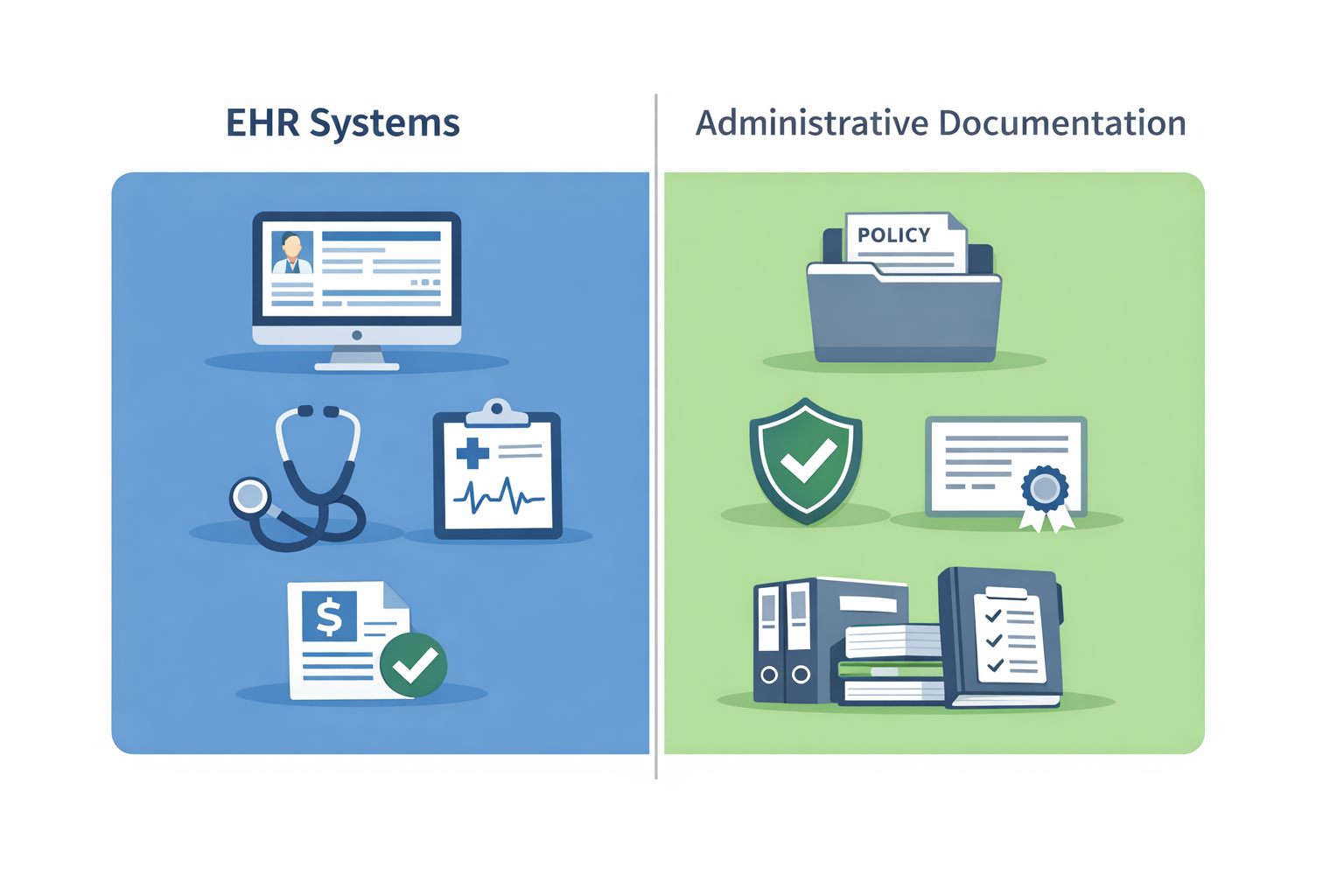
Most healthcare practices today rely on an Electronic Health Record (EHR) system to manage patient care, clinical documentation, and billing workflows. These systems are essential — and they do a lot of heavy lifting.
However, many practices still experience administrative stress around audits, documentation requests, and reimbursement follow-ups, even with an EHR in place.
Why?
Because EHRs were never designed to manage all of the administrative documentation that supports a healthcare practice’s operations.
🖥️ What EHR Systems Do Well
EHR systems are built to support clinical and billing workflows. They typically handle:
- Patient records and encounter notes
- Clinical documentation tied to visits
- Coding and claim submission workflows
- Billing and reimbursement tracking
For clinical care and revenue cycle operations, EHRs are indispensable.
📂 What EHR Systems Don’t Manage Well
Most EHR platforms are not designed to manage non-clinical, administrative documentation, such as:
- HIPAA administrative policies and procedures
- OSHA safety documentation
- Practice-level operational manuals
- Training records and attestations
- Historical versions of policies and procedures
- Administrative records requested during audits or reviews
As a result, these documents often live in shared drives, binders, email inboxes, or multiple locations — making them harder to maintain and retrieve.
⚖️ Why Administrative Documentation Still Matters
When reimbursement questions arise, claims are reviewed, or audits occur, practices are often asked to provide supporting documentation beyond what lives inside the EHR.If administrative documentation is:
- Incomplete
- Outdated
- Disorganized
- Difficult to locate
The process becomes slower, more stressful, and more disruptive — even if the underlying clinical care and billing were appropriate.
In many cases, the challenge isn’t the EHR or the reimbursement system itself — it’s the administrative effort required to respond efficiently.
🧩 The Supporting Role Sentinel Healthcare Solutions Plays
Sentinel Healthcare Solutions operates outside the EHR — and intentionally so.
Our role is to support healthcare practices by managing the administrative compliance documentation systems that EHRs don’t cover.
We help practices:
- Organize and maintain non-clinical compliance documentation
- Keep administrative records current and accessible
- Maintain version control and historical documentation
- Reduce administrative friction when documentation is requested
We do not provide billing advice, coding guidance, or reimbursement guarantees. Instead, we focus on ensuring that the administrative documentation supporting your internal processes is organized and ready when needed.
🤝 How This Supports Reimbursement Workflows (Without Promising Outcomes)
Well-organized administrative documentation can support smoother internal workflows by:
- Reducing time spent searching for records
- Improving response efficiency during documentation requests
- Supporting internal review and appeal processes
- Minimizing administrative disruption to daily operations
While outcomes always depend on many factors outside of documentation alone, having organized administrative records helps practices operate with greater confidence and less stress.
🛡️ A Clear Boundary — By Design
Sentinel Healthcare Solutions does not:
- Interpret reimbursement regulations
- Advise on coding or billing strategies
- Represent practices in reimbursement disputes
- Guarantee payment outcomes
Our role is administrative support — providing structure, organization, and continuity for the documentation systems that support your practice’s internal compliance and operational efforts.
🧠 The Takeaway for Small Practices
EHR systems are powerful tools, but they are not complete administrative documentation systems.
Practices that recognize and address this gap often experience:
- Reduced administrative stress
- Improved internal organization
- Greater confidence during reviews or inquiries
- More efficient day-to-day operations
Administrative support doesn’t replace clinical systems — it complements them.
🔍 Where Sentinel Fits
Sentinel Healthcare Solutions was built to support the administrative side of healthcare operations — quietly, consistently, and without overstepping into advisory roles.
If managing compliance documentation feels like a distraction from patient care and operations, administrative support may be the missing layer.
👉 Request Review
**Sentinel Healthcare Solutions provides administrative compliance documentation support services. We do not provide legal advice, billing guidance, regulatory interpretations, or compliance or reimbursement guarantees.