🧩 The Missing Middle in Healthcare Compliance - Sentinel Healthcare Solutions is the Answer
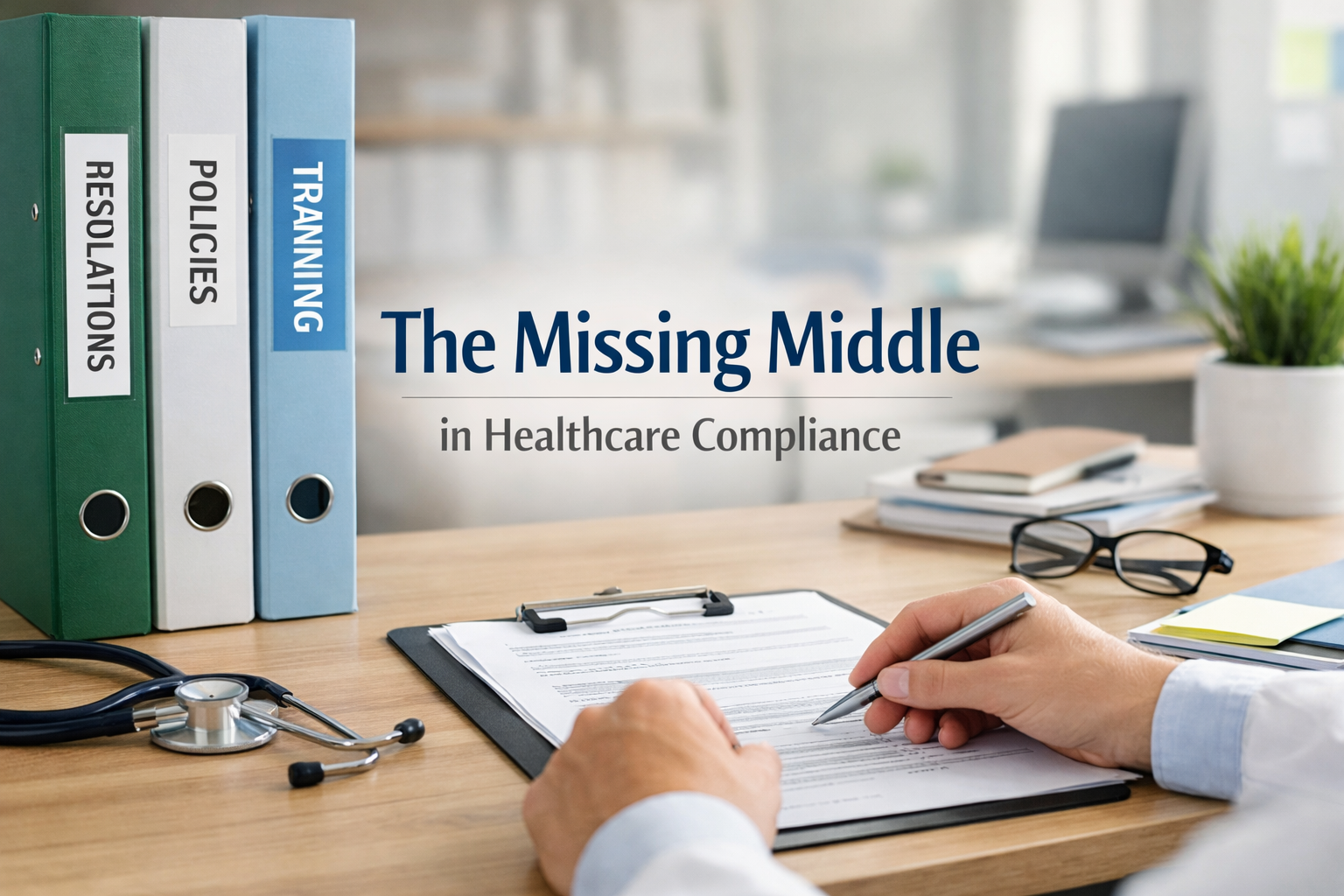
When healthcare professionals think about compliance, the options usually feel extreme.On one end, there are enterprise-level compliance platforms and consultants designed for hospitals and large systems. On the other, there are do-it-yourself templates and training materials that assume someone on staff has the time to manage it all.
For many small and independent healthcare practices, neither option truly fits.
This gap is what we call the missing middle in healthcare compliance — and it’s where many practices quietly struggle.
📂 Compliance Isn’t the Problem — Managing the Documentation Is
Most small practices are not intentionally out of compliance. In fact, many care deeply about doing things the right way.
The real challenge is administrative:
- Policies exist, but they’re outdated
- Documents are spread across folders, emails, and binders
- Records are hard to locate quickly
- Updates happen inconsistently over time
Compliance becomes stressful not because of regulations themselves — but because documentation management becomes overwhelming.
⚖️ Why Traditional Compliance Solutions Don’t Always Fit
Many available solutions fall into one of three categories:
- Legal or consulting services that focus on interpretation and advisement
- Training programs that educate staff but don’t maintain systems
- Software platforms that provide tools, but still require internal oversight
For small practices, these options can feel too heavy, too technical, or too disconnected from day-to-day operations.
What’s often missing is ongoing administrative support — someone to organize, maintain, and manage compliance documentation as part of normal business operations.
🧠 Introducing a Different Way to Think About Compliance Support
Administrative compliance documentation support sits between “doing it all yourself” and hiring enterprise-level consultants.
It focuses on:
- Organizing existing compliance documentation
- Creating structured, easy-to-maintain systems
- Keeping records current and accessible over time
- Reducing administrative burden and uncertainty
This approach doesn’t replace legal counsel or internal compliance responsibility — it supports it by handling the administrative workload that often falls through the cracks.
🧩 Why This Matters for Small Healthcare Practices
Small practices operate lean by necessity. Time spent chasing paperwork, updating policies, or searching for documents is time taken away from patient care and operations.Well-organized documentation helps practices:
- Reduce administrative stress
- Improve internal consistency
- Respond more efficiently to documentation requests
- Operate with greater confidence and clarity
In many cases, simply having documentation organized and maintained makes compliance feel manageable again.
🤝 Where Sentinel Healthcare Solutions Fits
Sentinel Healthcare Solutions was built specifically to support this missing middle.
We provide administrative compliance documentation support for healthcare organizations by helping organize, maintain, and manage compliance records over time.
We don’t provide legal advice, regulatory interpretations, or compliance guarantees. Instead, we focus on the administrative foundation — so your internal compliance efforts are supported by clear, structured documentation systems.
Our goal is simple:
Make compliance administration easier and less stressful for small healthcare practices.
🔍 Is Administrative Support the Right Fit for Your Practice?
If compliance feels overwhelming — not because you don’t care, but because managing the documentation is difficult — administrative support may be exactly what’s missing.
A documentation systems review can help identify where organization and structure could reduce day-to-day stress.
👉 Request Review